A buyer goes quiet after a strong call. Another keeps checking your pricing page. A third suddenly starts using the product more. Most sales teams can see those signals, but still struggle to decide what to do next. That gap is getting more expensive.
The U.S. Census Bureau reported that first-quarter 2024 e-commerce sales rose 8.5% year over year, which shows how much buyer activity now happens through digital behavior, not just rep instinct. That is where AI for next-best action in sales becomes useful.
In this blog, you will learn how it works, what signals it needs, where voice AI fits, and how sales leaders can use it to make better pipeline decisions.
Executive Summary (2026): AI next-best action systems are shifting sales from activity-driven execution to decision-driven workflows. The biggest impact comes from better prioritization, earlier risk detection, and directly connecting recommendations to execution systems, enabling US revenue teams to act on signals faster and more effectively.
Key Takeaways
- Most sales teams lose momentum because the next action is poorly prioritized, not because reps are inactive.
- Static sequences are becoming less useful in dynamic sales environments where buyer signals change quickly.
- Conversation intelligence, including automatic speech recognition (ASR) and natural language understanding (NLU), is now a core input for decision-making.
- AI creates real value only when recommendations connect directly to execution systems and live workflows.
- Sales leaders benefit most when action logic, workflow guardrails, and manager oversight stay connected.
What Is AI for Next-Best Action in Sales?
AI for next-best action in sales uses data, conversation signals, and business rules to identify the most effective next step for each lead, deal, or account. It helps sales teams prioritize outreach, improve timing, and guide follow-up based on real buyer behavior, pipeline context, and likely conversion impact.
If you want the bigger picture on where this shift is heading across modern sales organizations, continue with How AI Agents are changing Sales Forever
How AI Helps Sales Teams Choose the Next Best Action in Real Time
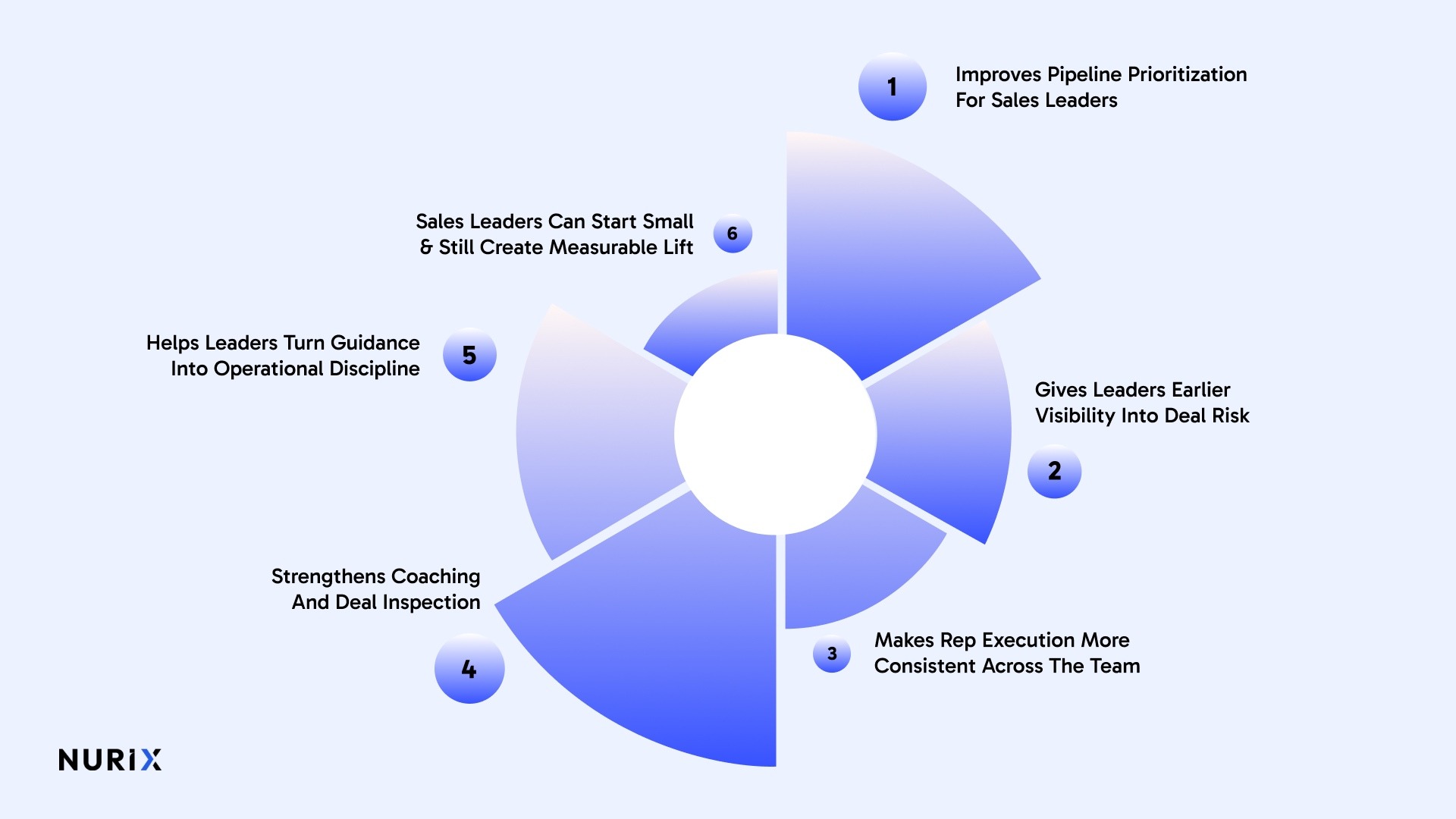
Artificial intelligence helps sales leaders improve decision quality across the pipeline by identifying which rep action is most likely to move a deal forward at that moment. Instead of relying on rep instinct, delayed inspection, or static sequences, leaders get a system that improves prioritization, exposes deal risk sooner, and makes execution more consistent across the team.
1. Improves Pipeline Prioritization For Sales Leaders
One of the hardest management problems in sales is deciding where rep time should go. Most teams still rely on task age, stage labels, or rep judgment, which often pushes attention toward the loudest account rather than the most valuable opportunity.
AI improves that prioritization by ranking actions against live deal conditions, account activity, and expected revenue impact.
- Rep time shifts toward higher-value opportunities: Leaders can direct seller effort toward accounts showing stronger buying signals instead of spreading attention evenly across the pipeline.
- Priority becomes dynamic, not static: When account behavior changes, recommended actions change with it, so teams do not keep following outdated plans.
- Coverage quality improves across the book: Reps are less likely to overwork low-probability deals while under-serving opportunities that are ready to progress.
2. Gives Leaders Earlier Visibility Into Deal Risk
Sales leaders often learn that a deal is slipping only after activity slows, meetings disappear, or the forecast has already weakened. By then, intervention is reactive.
AI improves timing by detecting risk patterns earlier, including response delays, weak engagement, stalled stage progression, and changes in conversation quality.
- Deal risk surfaces before weekly reviews: Leaders can identify quiet or deteriorating opportunities while there is still time to intervene.
- Manager intervention becomes more precise: Instead of asking for a general update, leaders can step in based on a specific drop in momentum or engagement.
- Forecast surprises are reduced: Earlier risk visibility helps leaders pressure-test deal health before slippage shows up in commit numbers.
3. Makes Rep Execution More Consistent Across The Team
In most sales organizations, strong execution depends too heavily on individual rep judgment. Top performers usually know when to push, when to wait, and what action fits the buyer’s context. That decision quality does not always scale across the broader team.
AI helps close that gap by recommending actions based on deal conditions rather than relying only on seller instinct.
- Best-practice decisioning becomes more repeatable: Leaders can extend stronger follow-up logic beyond their highest performers.
- Execution quality becomes less uneven: Similar deal conditions can trigger similar recommendations, which reduces avoidable variation across reps.
- New rep ramp becomes more effective: Less experienced sellers get clearer guidance on what to do next, which improves consistency without adding constant manager involvement.
4. Strengthens Coaching And Deal Inspection
Most pipeline coaching happens after the fact. Managers inspect deals based on rep summaries, incomplete activity history, or subjective confidence. That makes coaching slower and less specific than it should be.
AI gives leaders a more concrete basis for inspection by tying recommended actions to observable sales signals and measurable outcomes.
- Coaching becomes signal-based: Leaders can review why an action was recommended, whether it was taken, and whether it improved deal movement.
- Deal reviews become more actionable: Managers can focus on decision quality, timing, and execution gaps instead of repeating status checks.
- Accountability improves across the team: Reps are measured not only on activity volume, but on whether they acted on the right opportunities at the right time.
5. Helps Leaders Turn Guidance Into Operational Discipline
Recommendation quality matters, but leadership value increases when those recommendations shape how the sales motion actually runs. Without that layer, teams may still default to inconsistent follow-up habits and manual prioritization.
AI helps create stronger operating discipline by connecting guidance to workflows, rules, and escalation paths.
- Action standards become clearer: Leaders can define what should happen when a deal stalls, when intent rises, or when engagement drops sharply.
- Escalation becomes more structured: High-risk or high-value opportunities can move to the right manager, specialist, or account executive using defined rules.
- Sales motions become easier to manage at scale: Teams can run with more consistency because action selection is supported by a shared decision framework.
6. Sales Leaders Can Start Small And Still Create Measurable Lift
The value of next-best-action systems does not depend on transforming the entire revenue engine at once. In fact, most leaders get better results when they start with one sales problem where action quality clearly affects conversion outcomes.
A narrow rollout helps teams prove value faster and build trust before expanding into broader workflows.
- Start with one decision area: Leaders can begin with follow-up prioritization, stalled-deal recovery, or lead routing instead of redesigning every motion.
- Define the action logic clearly: Teams need agreement on what signals matter, what actions can be recommended, and when managers should step in.
- Measure business outcomes, not task volume: The real test is whether recommendations improve speed to follow-up, stage progression, meeting conversion, or forecast quality.
For sales leaders, real-time next-best-action systems matter because they improve where reps spend time, how early risk is detected, how consistently teams execute, and how confidently managers inspect pipeline decisions.
Test whether your action logic can handle multilingual buyer conversations, execute the right next step in real time, and show per-language performance inside NuPulse. NuPlay by Nurix AI makes that evaluation easier across live sales workflows. Schedule a custom demo.
What Data and Conversation Signals AI Needs to Recommend the Next Best Action
AI recommends the next move only when it combines historical account context, live buyer behavior, and conversation intelligence into one decision layer. That means using customer relationship management records, intent signals, product and support activity, and call-level cues together, then filtering them through business rules before ranking the next step.
Recommendation quality depends on whether the system can read account history, detect live intent, and interpret buyer conversations in context.
Better inputs create better action ranking, which makes the NBA more precise, timely, and useful for revenue teams.
If your team is still figuring out how language, intent, and conversation signals affect sales execution across markets, continue with What is Multilingual Sales AI? Top Use Cases and Benefits
AI for Next-Best Action in Sales vs Next-Best Offer vs Static Sales Sequences
AI decides the best interaction, timing, and channel using live buyer context. Next-Best Offer only decides what to recommend next. Static sales sequences follow fixed steps on a preset schedule, even when buyer intent, account signals, or conversation quality change mid-cycle.
Decisioning differences become clearer when you compare scope, inputs, and execution flexibility side by side.
NBA gives sales leaders broader control over timing, channel, and action quality, which makes it more useful than offer-led logic or rigid sequences.
If you want a broader view of how intelligent decisioning is reshaping revenue motions beyond this comparison, read The Power of AI in Sales and Marketing Strategy
How to Roll Out AI and Voice AI Next-Best-Action Workflows Across Sales Teams
Roll out AI and voice AI workflows by sequencing deployment carefully, so recommendation quality, rep adoption, and manager trust improve before broader automation begins.
Deployment works best when each rollout step improves system accuracy, workflow fit, and operational confidence.

- Inbound Qualification: Voice AI captures need, urgency, and fit during the first conversation, then routes the lead based on real qualification signals.
- Follow-Up Selection: It recommends the next call, email, or meeting based on what the buyer actually said, not a preset sequence.
- Objection Handling: It detects pricing, budget, security, or competitor concerns and guides the rep toward the right response path.
- Deal Rescue: It surfaces hesitation, weak commitment, or tone shifts early enough for managers to intervene before the deal stalls.
- Post-Call Execution: It updates records, logs next steps, and triggers the right workflow immediately after the conversation ends.
Strong rollout depends on sequence, signal quality, and controlled adoption, so teams can scale recommendations without weakening rep trust or execution discipline.
Validate rollout quality by checking multilingual handling, orchestration across sales systems, workflow completion, and per-language visibility in NuPulse before scaling further. NuPlay by Nurix AI helps teams evaluate those conditions inside governed production workflows. Get in touch with us for a custom demo.
How to Set Guardrails for AI Recommendations in Sales
Sales teams set guardrails for AI recommendations by defining when the system can suggest, escalate, suppress, or hand off actions across accounts, channels, and deal stages.
Effective guardrails keep recommendations useful, compliant, and aligned with the selling strategy.
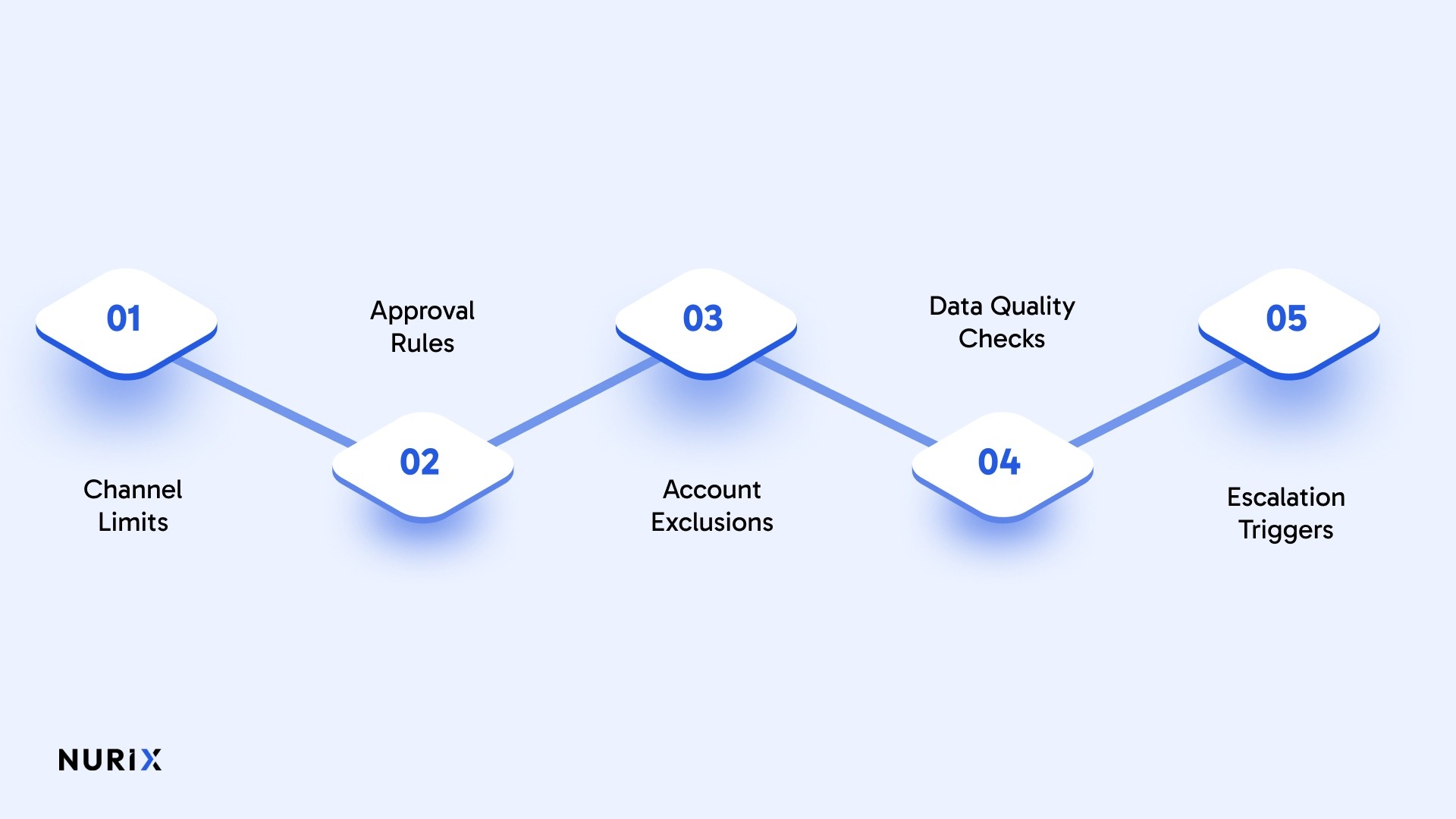
- Channel Limits: Set call, email, and text thresholds by stage to prevent over-contact and preserve reply quality.
- Approval Rules: Require manager review for discount, legal, procurement, or renewal-risk recommendations before the system triggers outreach.
- Account Exclusions: Block automation on strategic, regulated, or active-negotiation accounts where relationship context outweighs model confidence.
- Data Quality Checks: Suppress recommendations when customer relationship management records, contact ownership, or stage history are incomplete or conflicting.
- Escalation Triggers: Route sentiment drops, multithread loss, or stalled security reviews to managers before the opportunity slips.
Strong guardrails turn AI from a risky suggestion engine into a controllable sales system that scales action quality without damaging customer experience or manager trust.
What Gets in the Way of AI-Driven Next-Best Action in Sales
AI-driven sales decision programs usually underperform when recommendation logic is built on incomplete data, weak workflow design, or low rep trust. The issue is rarely the model alone. It is the breakdown between signal quality, sales process fit, manager oversight, and execution discipline across teams, systems, and stages.
Common blockers become easier to fix when teams separate data problems, workflow problems, and adoption problems.
AI next-best-action workflows fail when signal quality, action design, and sales governance stay disconnected, making recommendation accuracy harder to trust and scale.
How NuPlay by Nurix AI Supports Voice AI Next-Best-Action Execution for Sales Teams
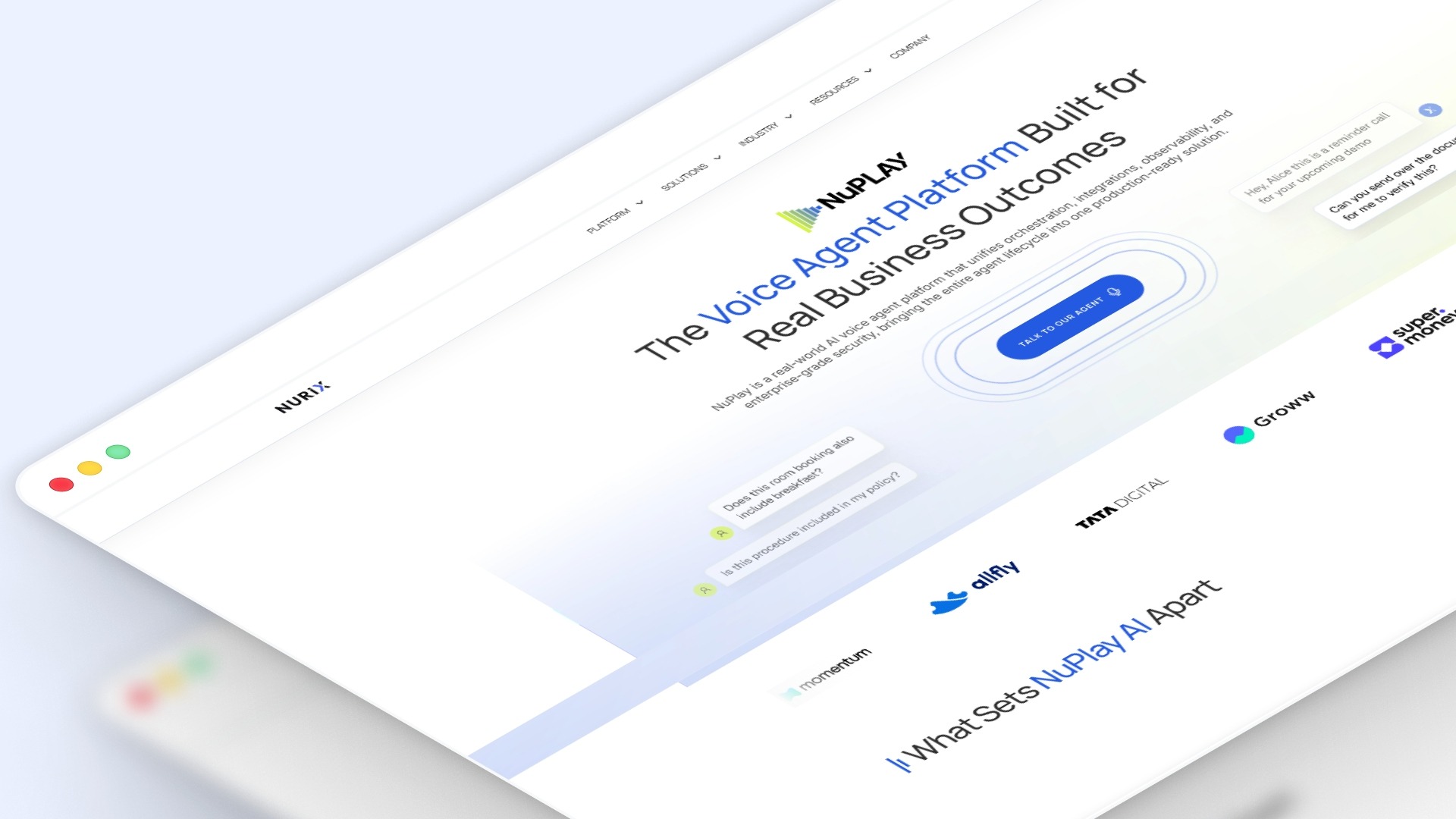
NuPlay by Nurix AI is an enterprise voice and chat AI platform that helps teams design, deploy, monitor, and optimize AI agents for real sales workflows. It supports voice AI next-best-action execution by connecting live conversations, system actions, orchestration, and observability in one production-ready environment.
What makes NuPlay more useful in this workflow is its ability to connect recommendation logic to execution, control, and optimization inside the same environment.
- Execution Inside The Conversation: NuPlay by Nurix AI can fetch data, update systems, and complete tasks while the call is still happening.
- Orchestration Across Complex Flows: It supports branching logic, multi-turn conversations, and agent-to-agent coordination for real sales workflows.
- Model Flexibility Without Lock-In: Teams can choose models based on accuracy, latency, or cost instead of building around one stack.
- Enterprise Control Built In: Role-based access, audit logs, version control, and personally identifiable information redaction support governed deployment from day one.
- Optimization After Go-Live: NuPulse ties conversion, drop-off, and decision metrics back to agent flows so teams can improve what is not working.
Anyteam used Nurix to build an AI-native sales workflow layer that increased conversions by 71% and reduced cycle time by 80%, showing how voice-led execution can improve both speed and sales efficiency.
NuPlay by Nurix AI stands out when sales teams need next-best-action systems to execute during live conversations, stay governed across workflows, and improve through measurable post-launch optimization.
Final Thoughts!
The biggest takeaway is simple. Sales teams perform better when they stop treating every lead, deal, and follow-up the same. The real value of AI for next-best action in sales is not more automation. It is knowing when to act, when to wait, which channel to use, and where manager intervention can change the outcome.
That is what improves pipeline movement, rep consistency, and forecast confidence. NuPlay by Nurix AI is built for that kind of execution, helping teams turn live voice signals and workflow logic into timely, controlled next steps across the sales process. Schedule a custom demo!
Author: Sakshi Batavia, Marketing Manager
Sakshi Batavia is a marketing manager focused on AI and automation. She writes about conversational AI, voice agents, and enterprise technologies that help businesses improve customer engagement and operational efficiency.



.jpg)