
Automated Outbound Calling Software Features and Best Practices
.jpg)

Don’t miss what’s next in AI.
Subscribe for product updates, experiments, & success stories from the Nurix team.
Manual outbound calling slows follow-up, creates inconsistent outreach, and makes it difficult for teams to scale campaigns without increasing headcount. For sales, support, collections, and reminder workflows, the challenge is not just placing more calls. It is reaching the right contacts quickly, with the right context, while maintaining compliance and visibility across the process.
This is why more teams are investing in automated outbound calling software. The global predictive dialer software market was valued at $3.20 billion in 2024 and is expected to grow at a 42.3% CAGR from 2025 to 2030, reflecting the increasing demand for faster and more efficient customer engagement workflows.
The best automated outbound calling platforms do more than dial numbers. They combine dialing modes, CRM integration, voicemail automation, analytics, and compliance controls to help teams run outbound programs more efficiently and consistently at scale.
In this guide, we’ll break down how automated outbound calling works, the dialing modes that support different campaign goals, the most important features to evaluate, and the best practices businesses should follow before scaling outbound operations.
Executive Summary (2026): Automated outbound calling helps teams scale outreach through predictive dialing, voicemail automation, CRM syncing, analytics, and compliance controls. The best solutions do more than increase call volume — they improve agent productivity, support faster follow-ups, and make outbound campaigns easier to manage across voice, SMS, and other channels.
Key Takeaways
- Automated outbound calling is not just autodialing. The real value comes from combining dialing modes, CRM context, analytics, and compliance into one repeatable workflow.
- Different dialing modes solve different problems. Predictive dialing suits high-volume campaigns, while power and preview dialing work better when lead quality or conversation context matters more.
- The best outbound workflows improve speed and relevance at the same time. Faster follow-up only works when calls are also connected to lead data, routing rules, and real-time campaign insights.
- Compliance is a product requirement, not an afterthought. Do-not-call checks, consent tracking, call windows, and secure records are essential for sustainable outbound automation.
- The strongest platforms support full workflow execution. Teams get better results when outbound calling connects with CRM updates, follow-ups, summaries, and performance analytics instead of sitting in a silo.
What is Automated Outbound Calling?
In a nutshell, automated outbound calling is a technology that eliminates dialing. You can automate calls to prospects or customers using autodialers, from leaving voicemails to detecting if a live person answers. It makes the calling process faster, more efficient, and highly scalable.
Whether using automated outbound call software or an automated outbound calling system, it simplifies and speeds up the whole process.
Why Businesses Love To Automate Outbound Calling:
- No More Manual Dialing: Automated systems automate outbound calls, saving agents hours that would be spent dialing numbers.
- Efficient Lead Management: These solutions sync with CRMs, so automated outbound call software can pull real-time data and allow agents to personalize calls based on customer history and preferences.
- Instant Voicemail Drops: Pre-recorded messages are left when a voicemail is detected, so agents can focus on live conversations instead of leaving repetitive messages.
- Compliance at Scale: Automated outbound calling solutions manage do-not-call lists and ensure your campaigns are compliant, so you don't burden your agents and protect your business from legal issues.
- Boosted Agent Focus: Using an automated outbound calling service to remove tedious tasks, agents can focus on meaningful conversations with leads, increasing productivity and conversion rates.
Automating outbound calls eliminates manual tasks while enabling personalization, making it ideal for high-volume campaigns or targeted outreach using advanced outbound call software.
How Does Automated Outbound Calling Work?
When you automate outbound calling, it combines smart tech with human touchpoints to create a seamless process from start to finish. These systems are like tireless assistants, handling everything from dialing and follow-ups to data collection.
Here's how outbound calling software works:
- AI-Driven Dialers: At the core are AI dialers, like predictive dialers, that dial multiple numbers at once. Agents are connected only when someone answers, so you cut out time wasted dialing manually or hitting voicemail. This is key to outbound calling automation and boosts productivity overall.
- Power Dialing: For smaller or targeted lists, outbound call systems use power dialers that dial the next number as soon as the previous call ends. Thus, agents are always engaged, downtime is minimized, and call volume and lead engagement increase.
- CRM Integration: Your outbound calling software syncs with your CRM, pulling real-time lead data to personalize every call. This eliminates manual data entry and ensures every conversation is tailored to the prospect, boosting conversions.
- Voicemail Detection and Drop: When the system detects a voicemail, it drops a pre-recorded message and moves on to the next call. No more leaving the same voicemail over and over. This speeds up the process and makes outbound calling automation software perfect for campaigns.
- Real-Time Data Collection: Outbound calling automation provides real-time analytics to track call duration, conversion rates, and outcomes. Managers can use this data to adjust campaigns on the fly and ensure that the automated calling service is always performing.
Automate outbound calling software that does more than dial numbers. It provides data, automates the mundane, and lets agents talk to prospects. So, let's look at the different dialing modes these systems offer.
Types of Dialing Modes in Automated Outbound Calling Solutions
Every campaign is unique, and automated outbound calling solutions offer dialing modes tailored to specific needs. These modes not only streamline your processes but also make life easier for your team.
Choosing the right dialing mode is critical because it directly affects agent productivity, customer experience, and compliance risk.
1. Predictive Dialing
Predictive dialing is designed for high-volume outbound campaigns where maximizing agent talk time is the priority. The system dials multiple numbers simultaneously based on algorithms that estimate agent availability and answer rates.
Agents are only connected when a live person answers, which reduces idle time and increases the number of conversations per hour.
This mode works best for:
- Large outbound sales campaigns
- Collections
- Telemarketing
- High-volume lead outreach
However, predictive dialing requires careful configuration to avoid dropped calls and compliance risks, especially in regulated environments.
2. Power Dialing
Power dialing automatically places the next call as soon as an agent becomes available. Unlike predictive dialing, it does not dial multiple numbers in parallel, which gives teams more control over pacing.
This mode balances efficiency and control by keeping agents consistently engaged without overwhelming them.
Power dialing is well suited for:
- Structured outbound campaigns
- Mid-volume sales outreach
- Teams that want steady call flow without aggressive pacing
3. Progressive Dialing
Progressive dialing places one call per available agent, ensuring that a live agent is always ready before a call is connected. It reduces the likelihood of abandoned calls while maintaining a reasonable level of efficiency.
This makes it a strong middle-ground option between predictive and preview dialing.
Progressive dialing works well for:
- Customer engagement campaigns
- Service follow-ups
- Outbound programs where call quality matters alongside efficiency
4. Preview Dialing
Preview dialing gives agents access to lead or customer information before placing the call. Agents can review context such as previous interactions, account history, or qualification data before initiating the conversation.
This approach prioritizes conversation quality over speed.
Preview dialing is ideal for:
- High-value sales conversations
- Enterprise outreach
- Complex products or services
- Scenarios where personalization is critical
Click-to-Call (Supporting Feature)
While not a full dialing mode, click-to-call functionality allows agents to initiate calls instantly from CRM or workflow systems. It reduces manual dialing errors and speeds up follow-ups, especially in smaller or more targeted campaigns.
The most effective outbound calling platforms support multiple dialing modes, allowing teams to adjust their approach based on campaign type, lead quality, and compliance requirements.
Now that we've covered how calls are dialed, let's explore the key features that make automated outbound calling solutions a game-changer for businesses of all sizes.
You might find this one equally interesting: The Future of Work: Integrating Human Intelligence with AI
Top 10 Features of Automated Outbound Call Systems
When evaluating automated outbound calling software, the goal is not to choose the platform with the longest feature list. It is to identify which capabilities actually improve campaign execution, agent productivity, visibility, and compliance.
The strongest outbound calling systems combine dialing controls, CRM integration, workflow automation, analytics, and governance into a single operational layer. These features determine whether outbound calling remains a fragmented activity or becomes a scalable, repeatable process.
1. Voicemail Drop Automation
- Time-Saving Efficiency: Automatically leaves pre-recorded messages, allowing agents to focus on live calls instead of manually leaving messages. For example, a sales team can reach out to hundreds of prospects efficiently.
- Consistency in Messaging: Ensures every prospect receives the same quality message, reinforcing brand messaging across campaigns. This uniformity can lead to better brand recognition and trust.
- Increased Outreach Potential: By automating voicemail drops, organizations can significantly increase their outreach efforts, leading to higher engagement rates.
2. CRM Integration
- Real-Time Data Synchronization: Integrates seamlessly with CRM platforms, providing agents with the latest customer information during calls. This ensures that agents can personalize conversations effectively.
- Enhanced Personalization: Facilitates tailored interactions by providing context from previous interactions, which can lead to improved customer satisfaction and loyalty.
- Improved Follow-Up Processes: Helps agents effectively track and manage leads, streamlining follow-ups and improving conversion rates by ensuring timely and personalized engagement with potential customers.
3. AI-Powered Call Routing
- Skill-Based Call Distribution: AI analyzes agent skills and prioritizes leads to route calls efficiently, ensuring that customers speak with the most qualified agents available.
- Reduced Wait Times: By minimizing customer wait times through intelligent routing, businesses enhance customer satisfaction and engagement levels significantly.
- Increased Operational Efficiency: Organizations using AI call routing report a significant improvement in agent productivity due to better call handling and reduced idle time.
4. Call Transcription and Analytics
- Instant Call Transcription: Converts calls into text for easy review and analysis, allowing managers to monitor key performance metrics effectively.
- Performance Tracking Metrics: Tracks call duration, resolution rates, and customer feedback, providing valuable insights for continuous improvement.
- Data-Driven Strategy Adjustments: Companies leveraging call analytics have improved campaign effectiveness significantly by adapting strategies based on real-time data insights.
5. Dynamic Call Lists
- Real-Time Updates on Leads: Utilizes dynamic call lists that adjust based on lead activity and engagement metrics, ensuring agents always target relevant leads.
- Targeted Outreach Efficiency: Helps agents focus on leads that are more likely to convert based on current data, leading to higher success rates in campaigns.
- Reduction of Wasted Efforts: Dynamic call lists help agents focus on relevant leads, reducing time wasted on unproductive calls and ensuring more efficient and targeted outreach efforts.
6. Compliance Management
- Automated Do-Not-Call List Checks: Ensures adherence to regulations by automatically checking against compliance lists to prevent legal issues.
- Consent Tracking Mechanisms: Monitors customer consent for calls, ensuring ethical practices are maintained throughout outreach efforts.
- Call-Time Regulation Adherence: Organizations utilizing compliance management features avoid legal penalties and maintain a positive reputation in their industry.
7. Multi-Channel Integration
- Cross-Platform Communication Capabilities: Integrates with SMS, email, and social media for a comprehensive communication strategy that enhances outreach opportunities.
- Streamlined Follow-Up Workflows: Creates seamless workflows that allow for consistent follow-ups across various channels, improving overall engagement with potential customers.
- Increased Touchpoints with Leads: Multi-channel strategies enhance engagement by reaching leads across multiple platforms, creating consistent touchpoints that improve customer interactions and increase conversion opportunities.
8. Predictive Dialing
- Minimized Idle Time for Agents: Dials leads just before agents become available, maximizing call efficiency and agent productivity during high-volume campaigns.
- Higher Call Volume Management: Predictive dialing optimizes call workflows, enabling agents to handle more calls efficiently within the same timeframe, maximizing productivity and outreach efforts.
- Optimized Agent Utilization Rates: Predictive dialing ensures agents are consistently engaged with leads rather than waiting between calls.
9. Real-Time Lead Scoring
- Engagement-Based Lead Prioritization: Scores leads based on their interactions and likelihood of conversion, enabling agents to focus on high-value prospects effectively.
- Focused Sales Efforts for Better ROI: Directs agents to focus on high-value leads with greater conversion potential, improving efficiency and enhancing overall sales outcomes through targeted efforts.
- Dynamic Scoring Adjustments: Continuously updates scores based on new data, keeping priorities aligned with current opportunities for maximum efficiency.
10. Customizable Call Scripts
- Dynamic Script Adaptation During Calls: Adjusts scripts in real-time based on customer responses for more relevant conversations while maintaining professionalism.
- Enhanced Customer Experience Through Personalization: Customizable scripts adapt to individual customer needs, enhancing personalization and creating more meaningful interactions that improve overall customer satisfaction and engagement.
- Improved Agent Performance Metrics: Agents equipped with customizable scripts report higher confidence levels during calls, leading to better overall performance outcomes.
Automating outbound calling is designed to save time, increase efficiency, and improve campaign results. Now, let's look at how real-time analytics helps performance.
While you’re at it, this is worth a read: Using AI in Customer Support Software
Common Use Cases for Automated Outbound Calls
Automated outbound calling works best when teams need to reach a large number of contacts quickly without sacrificing consistency or compliance. While the exact workflow varies by business, most use cases fall into a few common categories.
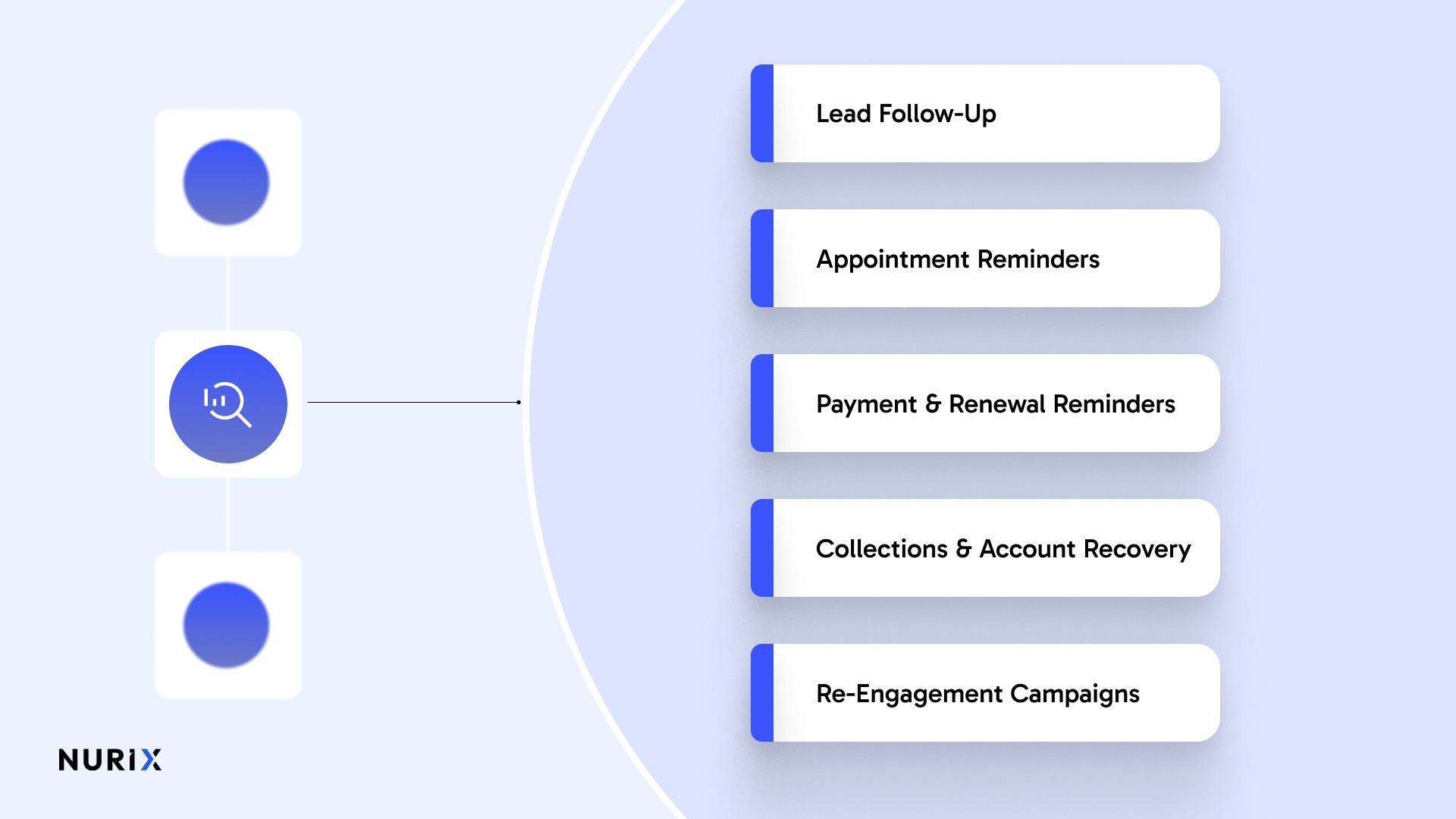
1. Lead Follow-Up
Sales teams use automated outbound calling to contact new leads quickly after a form fill, demo request, or inbound inquiry. Faster outreach improves the chances of connecting while interest is still high.
2. Appointment Reminders
Healthcare, home services, and field teams use automated outbound calls to remind customers about upcoming appointments, confirm attendance, and reduce no-shows.
3. Payment and Renewal Reminders
Finance, insurance, and subscription businesses use outbound calling automation to send payment reminders, renewal prompts, and account-related notifications at scale.
4. Collections and Account Recovery
Automated outbound calling can support collections workflows by prioritizing contact attempts, routing responses, and helping teams manage higher call volumes more efficiently.
5. Re-Engagement Campaigns
Businesses also use automated outbound calls to reconnect with dormant leads, inactive customers, or users who dropped off during a sales or onboarding process.
Boosting Campaign Performance with Automated Outbound Calls
Regarding campaign results, automated outbound calling solutions do more than save time; they give you an edge. Here's how these systems can auto-dial and supercharge your results:
- Increased Call Volume: Predictive and power dialers have your agents talking to live people instead of dialing. This increases calls per hour without adding stress. Automated outbound calling systems can handle high-volume calls with ease.
- Better Personalization: Automated outbound call software integrates with CRMs so agents can use real-time data to personalize conversations. Knowing a lead's preferences, past purchases, or pain points helps agents build a stronger connection and make calls more effective and interesting.
- Faster Lead Response: Contacting leads within minutes of their interest ensures faster engagement, providing a competitive edge over delayed follow-ups and improving the success of your campaigns.
- Data-Driven Adjustments: Automated outbound calling systems provide real-time analytics on key metrics like call outcomes and conversion rates. This allows for mid-campaign adjustments, so you always auto-dial for the best performance and continuously refine your strategy.
- Boosted Agent Efficiency: By auto-dialing outbound calls, repetitive tasks are streamlined so agents can focus on higher-value conversations. This increases agent morale and productivity, which directly equals better performance. Automated outbound calls software ensures agents talk to more leads and perform fewer manual tasks.
Did you know? Did you know that automated calls can collect valuable customer data during interactions, helping businesses refine their marketing strategies?
With increased call volume, faster lead response, better personalization, and data-driven decisions, automated outbound calling solutions enhance your campaigns and make them more efficient and successful.
Real-Time Analytics and Reporting in Outbound Call Automation
With real-time analytics, you can see your outbound campaigns and get instant feedback. This feedback helps you automate your outbound call strategy so it runs efficiently and adjusts quickly.
- Call Volume Tracking: Real-time tracking of how many calls are being made at any given time. This data helps you automate your outbound call schedules to get your agents more productive and reach out at the correct times.
- Conversion Rate Analysis: See how many automated outbound calls convert into leads or sales. If conversions drop, you can adjust your strategy, such as tweaking call scripts or targeting, to improve performance.
- Agent Performance Metrics: Get detailed data on each agent's performance to see who's top performing and who needs training. With automated outbound calling solutions, this data is at your fingertips so that you can get the most out of your team's efforts.
- Lead Quality Tracking: Identify responsive lead segments and adjust strategies. Automated outbound call software prioritizes high-quality leads, boosting conversion rates and ensuring more efficient, targeted campaigns.
- Campaign ROI Monitoring: Real-time analytics to see the return on investment and make quick decisions if a campaign is on track or needs adjustment. This flexibility means your automated outbound calls are continually optimized.
These insights empower you to tweak your campaigns on the fly, ensuring maximum efficiency. Beyond efficiency, automating outbound calls guarantees that your campaigns comply with vital legal regulations, safeguarding your business operations.
This could add even more to your knowledge: The Power of AI in Sales and Marketing Strategy
Compliance Management in Automated Outbound Calling Solutions
Compliance with Do-Not-Call (DNC) lists and data privacy laws is critical for businesses. Luckily, automated outbound calling solutions manage most of this, so you can be compliant while you automate outbound calls. Here's how:

- Do-Not-Call (DNC) List Management: The system checks numbers against DNC lists, so your team can't call restricted numbers. Automated outbound calling solutions keep your business compliant and avoid fines while you automate outbound calling.
- Consent Tracking: Automated outbound call software stores customer consent for calls so you're compliant with GDPR, TCPA, and other privacy laws. These solutions track and record consents so you reduce the risk of unwanted legal headaches and keep your automated outbound call system compliant.
- Call Time Restrictions: Automated outbound calls software respects call hours, so calls are only made during allowed times. This prevents you from calling leads outside of regulated hours and protects your business from fines.
- Real-Time Audits: These solutions provide real-time auditing so that every automated outbound call is compliant. Tracking compliance metrics lets you address issues in real time and keep operations running smoothly and compliant.
- Call Recording and Secure Storage: Calls are recorded and stored securely to meet regulatory requirements. This feature of automated outbound calling software keeps your data private so you can audit compliance or resolve disputes that may arise.
By automating outbound calls, compliance becomes less of a hassle, and your team can focus on delivering great customer experiences. While compliance is important, so is multi-channel integration, which extends your reach across channels.
This is what you're looking for next: Empathetic AI: The One that Understands: A little gem you might enjoy
Multi-Channel Integration for Outbound Automated Calling
Why limit yourself to one channel when you can reach leads across multiple? Outbound automated calling works with other channels like email and SMS to give you a full strategy for automating outbound calls and reaching more.
- Email Integration: With automated outbound calling, you can automate follow-ups by sending an email straight after a call. This will keep leads engaged, build relationships, and stay top of mind with prospects.
- SMS Messaging: Add SMS to your strategy with automated outbound calling to send reminders or follow-up offers. SMS works with your automated outbound call processes to engage leads quickly and easily.
- CRM Syncing: Sync your CRM with your automated outbound call system, and all interactions, calls, emails, and texts are in one place. This unified approach means agents have access to full lead information, and automated outbound calls and follow-ups are streamlined.
- Omni-Channel Campaigns: Omni-Channel campaigns combine automated outbound calling, SMS, and email marketing to reach more people. This integration allows your automated outbound call strategy to engage with leads where they will respond most to your campaign.
- Cross-Channel Analytics: Use cross-channel analytics to track how automated outbound calls, SMS, and emails interact. With real-time data, you can optimize engagement across all platforms, ensuring your automated outbound call efforts align with your multi-channel strategy.
Automated outbound calling systems also generate structured interaction data, helping teams refine targeting, messaging, and follow-up strategies over time.
Integrating multiple platforms alongside automated outbound calls makes your outreach more effective. This approach ensures you meet your audience where they prefer, strengthening your engagement and campaign success.
How NuPlay By Nurix AI Helps Automate Outbound Calls
NuPlay is an enterprise AI voice and chat platform by Nurix AI that helps teams automate outbound outreach across voice, chat, and connected business workflows. It combines human-like conversations, real-time workflow execution, and enterprise-grade governance so teams can scale follow-ups, qualification, reminders, and re-engagement campaigns without losing visibility or control.
How NuPlay Helps:
- Real-time voice agents for outbound engagement
NuPlay supports low-latency, human-like voice interactions that help teams handle outreach, qualify leads, capture intent, and move conversations forward without relying entirely on manual dialing workflows. - CRM-connected workflow execution
NuPlay integrates with CRM and enterprise systems so outbound conversations can trigger follow-up actions, update records, route qualified leads, and keep customer context current across the workflow. - Automation for qualification, routing, and follow-up
Instead of treating outbound calls as isolated touchpoints, NuPlay helps teams automate the next step, whether that means pushing a qualified lead to sales, triggering reminders, or routing a case based on customer response. - Conversation analytics and operational visibility with NuPulse
NuPlay gives teams access to transcripts, summaries, conversation logs, and performance insights through NuPulse, helping them track outcomes, identify drop-off points, and improve outbound workflows over time. - Enterprise-grade governance and compliance controls
Outbound programs need more than speed. NuPlay supports enterprise security, observability, and governance so teams can scale automation while maintaining auditability, role-based control, and data-handling discipline.
Together, these capabilities help businesses automate outbound calls in a practical, operationally useful way. Rather than adding another disconnected tool, NuPlay fits into existing systems, reduces repetitive work, and gives teams the visibility they need to scale outreach with confidence.
Conclusion
Automated outbound calling delivers the most value when it is tied to clear operational outcomes such as faster lead response, higher contact rates, improved reminder completion, or more efficient follow-up workflows. The role of automation is not just to increase call volume, but to improve how outbound campaigns are executed and managed.
The right platform should go beyond dialing. It should connect outbound calls with CRM data, support structured workflows, provide real-time visibility into performance, and ensure compliance as campaigns scale.
NuPlay by Nurix AI helps teams move beyond manual outreach by combining real-time voice agents, CRM-connected workflow execution, conversation analytics through NuPulse, and enterprise-ready governance. According to NuPlay case studies, teams have seen up to 30% higher Sales Qualified Lead (SQL) conversion rates, 3× pipeline coverage, and 25% lower acquisition costs.
Schedule a custom demo to explore how NuPlay can help your team automate outbound calls with more control, better visibility, and stronger operational outcomes.
Automated outbound calling is the use of software to place outbound calls at scale using tools such as predictive dialers, power dialers, voicemail drops, CRM integrations, and workflow automation. It helps teams reduce manual effort and improve campaign efficiency.
Predictive dialing places calls based on agent availability and is best for high-volume campaigns. Power dialing places one call immediately after another and is better for controlled outreach where agents still need a consistent pace.
Yes. Many automated outbound calling platforms support voicemail drops, SMS follow-ups, and email workflows so teams can manage outbound calls and messages as part of one coordinated campaign.
It can be, but only when the platform includes the right compliance controls. Businesses should look for features such as do-not-call list checks, consent tracking, call-time restrictions, recording controls, and audit logs.
The most important features usually include CRM integration, predictive or power dialing, voicemail automation, real-time analytics, compliance management, multichannel workflows, and reporting that helps teams improve campaign performance.
Don’t miss what’s next in AI.
Subscribe for product updates, experiments, & success stories from the Nurix team.


